How to Spot Fake NSK Bearings: What to Look For
A complete box with holographic seals and a QR code does not mean the bearings inside are genuine. High-end counterfeiters now replicate packaging with near-perfect accuracy, making visual inspection alone insufficient for authentication.
To identify fake NSK bearings, buyers must verify four layers: packaging security features, laser marking precision, dimensional tolerances against ISO standards, and authorized supply-chain documentation. No single check is enough; only a systematic approach catches modern counterfeits.
I remember standing on the exhibition floor in Hannover, watching a German buyer crack open a carton of 6205 units I had sourced. He pulled out one bearing, tilted it under the hall lights, and ran his fingernail along the seal shield lettering. "This is not Japanese origin," he said flatly. The packaging looked perfect—the hologram, the batch label, even the shrink wrap. But the laser-etched characters on the seal shield had micro-burrs along the edges, and the spacing between letters was visibly uneven. I had spent years on a quality inspection bench before moving into trade, and I knew exactly what he meant. That order was rejected on the spot. The buyer never replied to another email.
The lesson stuck: industrial buyers do not fear paying a premium. They fear receiving counterfeits that pass surface-level checks. And they will test whether you understand what they understand. If you cannot speak to laser depth tolerances, inner ring chamfer R-values, or the smell of the grease inside a sealed bearing, they will classify you as a middleman who cannot protect their supply chain. [NEED_CITE: counterfeit bearing failure rate distribution by application sector]
Let me walk you through the verification layers that actually separate authentic NSK bearings from sophisticated fakes.
What Packaging Clues Do Most Buyers Miss?
Genuine NSK packaging uses multi-layer security features that counterfeiters struggle to replicate simultaneously: micro-text holograms, batch-specific QR traceability codes, and tamper-evident seals with serialized numbering.
Most buyers check whether the box "looks right." That catches nothing. Modern counterfeit workshops produce packaging that matches genuine NSK boxes in color weight, cardboard thickness, and even logo placement. The differences live in details that require deliberate inspection.
Here is what I check on every shipment before it leaves the warehouse:
| Verification Point | Genuine NSK Packaging | Counterfeit Packaging |
|---|---|---|
| Holographic Seal | Micro-text readable under magnification | Blurred or absent micro-text |
| QR Code Traceability | Scans to official NSK verification system with batch match | Redirects to generic page or fails validation |
| Batch Number Format | Consistent with NSK’s global coding standard | Format deviations or duplicate batch numbers across shipments |
| Tamper-Evident Seal | Single-use destructible label with serialized ID | Reusable or non-serialized seal |
| Inner Packaging | Anti-static paper or VCI paper for corrosion protection | Ordinary paper or plastic wrap |
[NEED_CITE: NSK official anti-counterfeit packaging feature specifications]
A distributor in the Middle East once sent me photos of a bulk order where the QR codes on every single box led to the same verification page—regardless of the batch number printed on the label. Genuine NSK’s traceability system ties each QR code to a specific production batch and shipment record. When multiple boxes share one digital footprint, the entire lot is suspect.
Another red flag: the printing quality on the side label. Genuine NSK labels use thermal transfer printing with sharp, consistent character edges. Counterfeit labels often show slight ink bleeding or character misalignment that becomes visible under a loupe.
How Do Laser Markings Reveal Counterfeits?
Authentic NSK laser etching on bearing rings and shields produces characters with controlled depth, clean edge definition, and consistent spacing—features that counterfeit laser systems cannot reliably reproduce at production scale.
This is where my inspection background becomes useful. On a quality bench, we used a microscope with a depth gauge to measure laser mark characteristics. The key parameters are not about exact numbers that vary by bearing series—they are about consistency and edge quality.
Genuine NSK laser marking shows:
- Edge definition: Characters have sharp, clean boundaries with no micro-burrs or melted material ridges along the stroke edges.
- Depth consistency: The engraving depth remains uniform across the entire character set, without fading or over-penetration in specific areas.
- Spacing uniformity: Character-to-character spacing is precise and matches NSK’s typeface specifications for that bearing series.
- Surface discoloration pattern: Proper laser parameters produce a controlled oxidation color change without excessive heat-affected zones or surface roughness.
Counterfeit markings typically exhibit:
- Visible burrs or rough edges under magnification
- Inconsistent depth where some characters appear shallower or deeper than adjacent ones
- Irregular spacing, especially on curved surfaces like the outer ring OD
- Over-burned areas where the laser power was too high, creating rough surface texture
[NEED_CITE: laser marking quality standards for bearing identification per industry guidelines]
I once inspected a batch of tapered roller bearings where the laser marking on the inner ring looked acceptable at first glance. But when I rotated the ring under angled light, the character strokes showed a slight waviness—evidence that the laser beam had not been properly focused for the curved surface. Genuine NSK equipment uses rotary fixtures that maintain constant focal distance during marking. Counterfeit operators often mark flat and then bend, or use fixed-focus systems that cannot track the curvature.
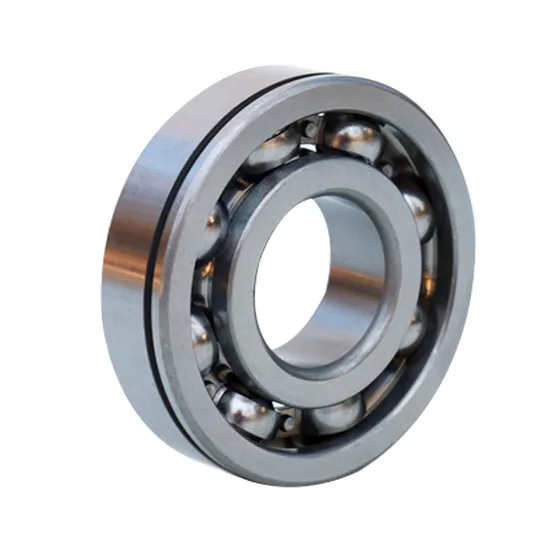
The seal shield lettering is particularly telling. On deep groove ball bearings with contact seals, the rubber shield carries laser-etched part numbers. Genuine NSK shields show characters with uniform depth through the rubber compound. Fakes often show tearing or uneven penetration because the laser parameters were not calibrated for that specific rubber formulation.
Which Dimensional Checks Catch What Visual Inspection Cannot?
Dimensional verification against ISO tolerance classes exposes counterfeits that pass all visual checks—because material removal and heat treatment errors cannot be hidden by surface finishing.
This is the layer that separates buyers who get lucky from buyers who have systems. A counterfeit bearing can look perfect, feel perfect, and even weigh the same as a genuine unit if the counterfeiter adds internal ballast. But it cannot fake dimensional accuracy without the manufacturing capability that defines NSK’s production standards.
The critical checks I recommend for incoming inspection:
Inner ring chamfer R-value: The chamfer at the bore edge of the inner ring must conform to NSK’s specifications for that series. I use a radius gauge set to verify this. Counterfeit bearings frequently have chamfers that are too large, too small, or inconsistent around the circumference—evidence of CNC turning programs that do not match NSK’s original specifications.
Outer ring roundness: Place the outer ring on a V-block and rotate it while measuring OD variation with a dial indicator. Genuine NSK rings maintain roundness within their ISO 492 class tolerance. Counterfeit rings often show noticeable out-of-round conditions because their grinding processes lack the spindle precision required.
Radial internal clearance: Measuring actual clearance against the specified range for the bearing’s C-class designation catches heat treatment errors. Counterfeit bearings that have been improperly hardened or tempered will show clearance values outside the acceptable band.
Width variation: Measure the ring width at multiple points around the circumference. Variations beyond the tolerance table indicate poor face grinding control.
| Dimensional Parameter | Inspection Method | What Deviation Indicates |
|---|---|---|
| Inner ring bore diameter | Caliper/bore gauge at multiple planes | Grinding process inconsistency |
| Inner ring chamfer R-value | Radius gauge set | Incorrect CNC program or tooling |
| Outer ring OD roundness | V-block + dial indicator | Insufficient grinding spindle precision |
| Radial internal clearance | Feeler gauge or electronic measurement | Heat treatment errors |
| Ring width variation | Micrometer at multiple points | Face grinding process issues |
[NEED_CITE: ISO 492 rolling bearing tolerance classes and measurement methods]
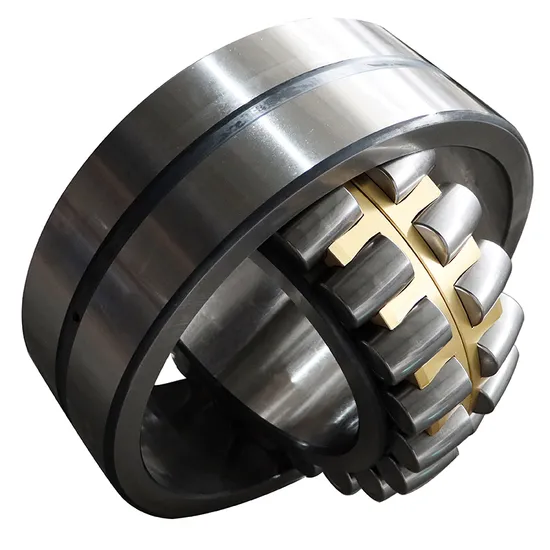
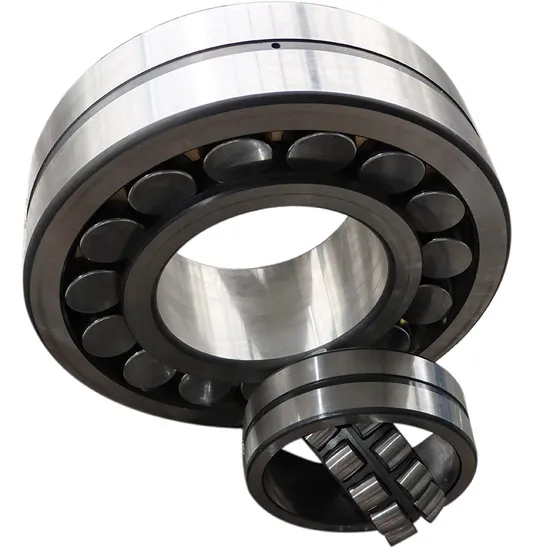
A maintenance team at a Latin American mining operation replaced a set of spherical roller bearings on a vibrating screen. Within weeks, the new bearings ran hot and failed. Post-mortem analysis showed the inner ring bore was oversized by a noticeable margin—enough to cause fit slippage on the shaft under vibration loading. The bearings had passed visual inspection and even felt solid. But the bore dimension was simply wrong. The counterfeiter’s grinding process could not hold the tolerance required for that shaft fit class.
Why Does Grease Smell Matter in Authentication?
The lubricant inside a sealed bearing carries chemical signatures that reveal whether the factory filling process matches NSK’s approved grease specifications—something counterfeiters rarely replicate correctly.
This sounds unusual until you understand that NSK specifies particular grease types for different bearing series and application conditions. The grease formulation affects not just performance but also the smell, color, and texture that experienced inspectors learn to recognize.
When I open a sealed bearing for spot-check inspection, I note:
- Odor profile: Genuine NSK grease has a characteristic mild petroleum base scent. Counterfeit grease often smells sharply chemical, overly perfumed to mask base oil quality, or noticeably rancid.
- Color and consistency: The grease should match the expected appearance for that bearing’s designated fill. Off-color, visible separation, or gritty texture indicates unapproved lubricant.
- Fill volume: NSK controls grease fill quantity precisely for each bearing size. Significantly over-filled or under-filled bearings suggest non-standard filling processes.
[NEED_CITE: bearing lubricant specification standards for sealed bearing applications]
I recall inspecting a batch of 6305 bearings where everything looked correct externally. But when I peeled back one seal for inspection, the grease had a strong, sweet chemical odor that did not match the mild base oil smell I expected. The grease also appeared slightly translucent when it should have been opaque. That single observation flagged the entire lot for deeper investigation, which subsequently confirmed dimensional deviations as well.
The grease check is not about laboratory analysis in the receiving dock. It is about training your senses to notice when something does not match the baseline you have established from known-genuine bearings. Build that baseline by opening genuine NSK bearings of the same series and noting the characteristics. Then compare incoming lots against that reference.
How Do You Verify That Your Supplier Is Actually Authorized?
The only definitive protection against counterfeit NSK bearings is purchasing through verified authorized distribution channels—because even perfect inspection cannot catch every sophisticated fake at scale.
This is where the conversation shifts from technical detection to supply chain control. No matter how skilled your inspection team, the most efficient authentication strategy is ensuring the bearing never enters a counterfeit pathway in the first place.
Here is how I verify supply chain legitimacy:
Check the NSK official distributor directory. NSK maintains a published list of authorized distributors by region. Any supplier claiming to offer genuine NSK bearings should appear on this list for your country or region. If they do not, demand an explanation—and verify that explanation independently.
Request the authorization certificate. Authorized distributors hold current certificates from NSK. These certificates specify the territory covered and the expiration date. Verify the certificate details directly with NSK’s regional office if there is any doubt.
Trace the mill documentation. For large orders, request the original mill test certificates or factory shipment documents that trace the bearings back to NSK’s production facility. Legitimate distributors can provide this chain-of-custody documentation.
Validate the transaction trail. Payments should flow to the authorized entity’s verified business accounts. Requests to pay third parties, use personal accounts, or route through unrelated trading companies are significant red flags.
[NEED_CITE: authorized distributor verification procedures per bearing manufacturer guidelines]
A European industrial buyer once asked me to source NSK bearings for a critical application after their previous supplier—claimed to be "authorized"—delivered a batch that failed authentication checks. When I checked the supposed distributor against NSK’s official list, they did not appear. The buyer had been purchasing from an unauthorized trader who had sourced the bearings through an unverified intermediary chain. The price had been attractive. The authentication cost—machine downtime, replacement procurement, and production delays—ran into multiple times the initial savings.
This is where our role in the supply chain becomes relevant. We maintain direct sourcing relationships with authorized NSK distribution channels and can verify distributor credentials before any order is placed. When buyers need NSK bearings for critical applications, we cross-reference the supply path against official authorization records and provide documentation that traces the product from NSK’s manufacturing facilities to the end user. This is not a service we advertise abstractly—it is the operational foundation of how we handle every NSK bearing order.
Conclusion
Spotting fake NSK bearings requires layered verification across packaging security features, laser marking quality, dimensional accuracy, grease characteristics, and supply chain authorization—no single check is sufficient against modern counterfeiting methods.
Industrial buyers who rely only on visual packaging inspection leave themselves exposed to sophisticated fakes that replicate surface appearance while failing on technical and supply-chain authentication. Building systematic incoming inspection procedures and sourcing exclusively through verified authorized channels eliminates the majority of counterfeit risk before it reaches your maintenance operations or resale inventory.