SKF MOQ for Wholesale: Bulk Order Guide for Genuine Bearings
Most buyers assume minimum order quantities exist to protect the manufacturer’s margins. In reality, MOQ structures exist to protect the integrity of the authorized distribution chain.
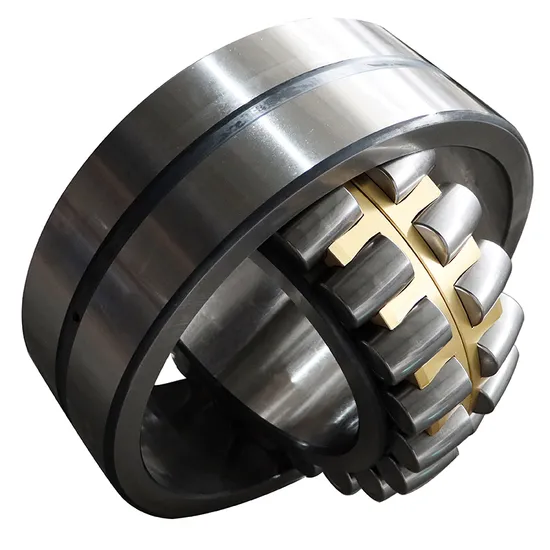
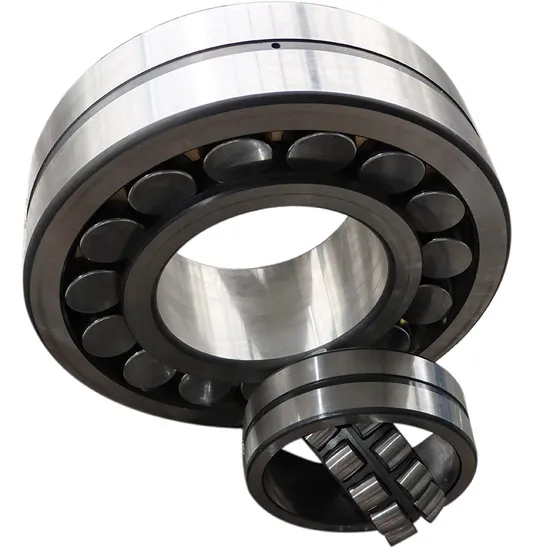
SKF MOQ for wholesale purchases is not a single fixed number across all product lines. It varies by bearing series, packaging configuration, and the tier of the distributor you are sourcing through. For high-volume standard models like the 6205 or 6305 deep groove ball series, MOQ thresholds tend to be lower because these SKUs move through the supply chain in full carton and full pallet quantities. For specialized series such as large spherical roller bearings or custom clearance variants, MOQ requirements climb noticeably because production runs are batch-scheduled and packaging is non-standard. The practical takeaway: if a supplier quotes you any quantity with zero questions asked, you are almost certainly not buying through a verifiable authorized channel.
I learned this the hard way during my years handling procurement for oilfield maintenance operations in the Gulf region. We needed a mixed batch of tapered roller bearings and deep groove units for a drilling rig overhaul. The quantities per SKU were modest — nowhere near a full pallet — and a local trader happily accepted the order at a price that seemed reasonable. The bearings arrived in unmarked boxes with no batch traceability. Within a few months of installation, seal failures started appearing across multiple positions. The rig went offline, and the replacement cost dwarfed whatever we thought we saved by avoiding proper wholesale channels [NEED_CITE: root cause distribution of premature bearing failures per ISO 15243]. That episode reshaped how I think about MOQ: it is not a barrier, it is a filter.
Let me walk you through how MOQ actually works in the SKF wholesale ecosystem, why some suppliers bypass it entirely, and how buyers with modest per-SKU volumes can still access genuine product at authorized pricing.
What Determines SKF Wholesale MOQ?
MOQ is shaped by three factors: the product series classification, the standard packaging unit, and the distributor tier through which the order flows.
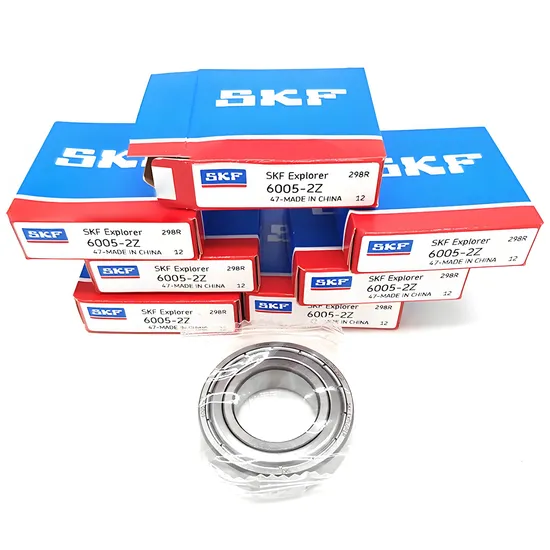
SKF organizes its catalog into series families — deep groove ball bearings, tapered roller bearings, spherical roller bearings, angular contact bearings, cylindrical roller bearings, thrust bearings, and so on. Each series has its own production cadence and packaging logic. A standard 6206 deep groove ball bearing ships in factory-sealed cartons containing a fixed inner-pack quantity, and full-carton orders are the baseline expectation at the wholesale level. You cannot open a factory carton and request a partial count; the integrity of the sealed packaging is part of the authenticity chain [NEED_CITE: SKF packaging integrity standards and sealed carton protocols for authorized distribution].
The distributor tier matters equally. SKF operates a multi-tier authorized distribution network. Top-tier distributors — often designated as SKF Authorized Distributors — carry stocking programs with contractual volume commitments. Their MOQ per order is effectively governed by their annual agreement, not by a per-transaction minimum. Second-tier dealers and sub-agents, however, typically face per-order MOQ thresholds because they do not hold blanket stocking commitments. When you source from a second-tier channel, the MOQ you encounter reflects that dealer’s own procurement economics, not a factory-imposed rule.
Then there is the question of special variants. Bearings with non-standard internal clearance (C2, C4), specialized cage materials, or pre-greased configurations for specific application environments often run in smaller production batches. The MOQ for these SKUs is inherently higher because the manufacturer consolidates demand into scheduled production windows [NEED_CITE: production batch scheduling logic for non-standard bearing variants in industrial manufacturing].
I have seen buyers in the Middle East attempt to order small quantities of C3-clearance spherical roller bearings for vibrating screen applications through channels that normally stock only standard-clearance units. The supplier either could not fulfill the order at all or substituted standard clearance without disclosure — a move that accelerates fatigue failure in high-vibration environments. The MOQ for that specific variant simply did not exist at that distributor’s level.
Why Do Some Suppliers Accept Any Quantity?
Suppliers who accept single-piece orders for wholesale-priced SKF bearings are almost always operating outside the authorized distribution framework.
This is the single most important thing for procurement teams in emerging markets to understand. When a trader in a wholesale market offers you any SKF bearing in any quantity at a price below what authorized channels quote, the transaction has already left the verifiable supply chain. The bearing may be genuine — pulled from an overstock liquidation, a cancelled project, or a parallel import — or it may not be. There is no way to confirm, because the documentation trail has been severed.
Authorized SKF distribution requires documented chain-of-custody at every handoff. When you purchase through proper channels, the transaction generates a traceable record: the distributor’s authorization status, the batch number on the carton, the country of origin declaration, and the ability to verify the product through SKF’s authentication tools [NEED_CITE: SKF authentication verification procedures for end-users and distributors]. Small-quantity transactions with informal traders generate none of this.
I have reviewed shipment after shipment arriving at ports in North and West Africa where the bearings were packed in boxes bearing SKF markings but lacking any verifiable batch documentation. The buyers had paid what they believed was a wholesale price for quantities that no authorized distributor would have processed as a standalone order. When those bearings failed in the field — and they did, at rates far exceeding normal — there was no invoice trail, no authorization certificate, and no batch number to report back to the manufacturer.
The pattern is consistent: zero-MOQ suppliers are not offering you flexibility. They are offering you untraceable inventory. The absence of an MOQ is not a service advantage; it is a structural indicator that the product has exited the controlled distribution environment where authenticity can be verified.
How to Meet MOQ Through Order Consolidation?
The most effective strategy for buyers whose per-SKU volumes fall below MOQ thresholds is multi-SKU order consolidation — combining multiple bearing types into a single shipment that meets the aggregate wholesale requirement.
This is not a theoretical workaround. It is how the majority of small and mid-size distributors in regions like the Middle East, Africa, and Latin America actually access genuine SKF product at authorized pricing. The logic is straightforward: an authorized distributor or a tier-one sourcing partner evaluates your total order value and total carton count across all SKUs, not per individual part number. If your combined order reaches the threshold, the entire shipment qualifies for wholesale pricing and proper documentation.
The process works in stages. First, compile your complete bearing requirement list — every SKU, every quantity, every application context. Second, identify which SKUs are standard-catalog items with low individual MOQ and which are special variants requiring higher thresholds. Third, group the order so that high-MOQ items are paired with sufficient volume of standard items to bring the aggregate above the channel’s requirement. Fourth, confirm with your sourcing partner that the consolidated order will be processed through an authorized channel with full documentation.
I have worked with buyers in East Africa who initially believed they could not access genuine SKF because their per-SKU orders were too small. By consolidating across deep groove ball bearings, tapered roller bearings, and spherical roller bearings — covering maintenance stock for mining equipment, agricultural machinery, and industrial gearboxes — their combined order reached the wholesale threshold comfortably. The cost savings compared to buying piecemeal from informal traders were substantial, and more importantly, every carton arrived with verifiable origin documentation.
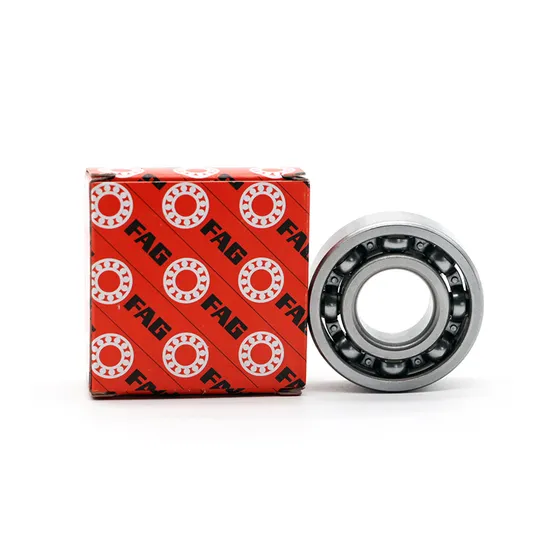
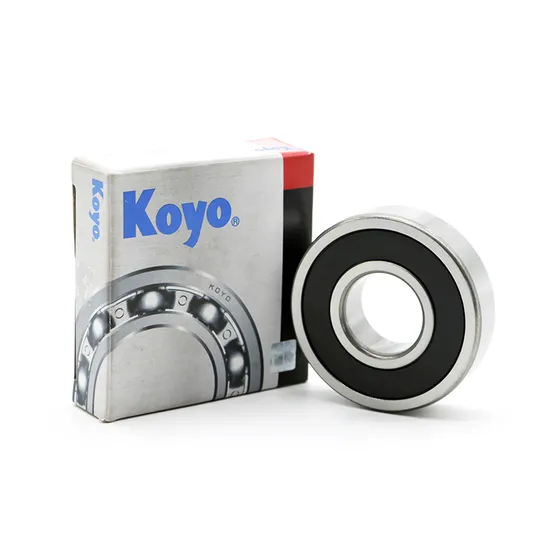
Our approach to cross-brand consolidation extends this further. Buyers often need SKF bearings for some positions and NSK, FAG, TIMKEN, NTN, or KOYO equivalents for others, depending on the OEM specification or the availability of interchange parts. By consolidating across brands in a single order, the aggregate volume increases further, making it easier to meet wholesale thresholds while ensuring every bearing — regardless of brand — is sourced through verifiable channels with complete authenticity documentation.
What Documents Verify Authenticity in Bulk Orders?
Three document categories form the non-negotiable authenticity verification framework for any wholesale SKF bearing purchase: country-of-origin certification, authorized chain-of-custody documentation, and product-level traceability markers.
Starting with country-of-origin documentation. Every genuine SKF bearing is manufactured in one of the manufacturer’s production facilities, and the country of origin is declared on the commercial invoice, the packing list, and the carton labeling. For import clearance in many jurisdictions, a formal certificate of origin — issued by the relevant chamber of commerce or trade authority in the exporting country — is required [NEED_CITE: certificate of origin requirements for industrial bearing imports under international trade regulations]. If your supplier cannot provide this, or if the declared origin does not match SKF’s known manufacturing locations, the shipment should be held pending investigation.
Next, the authorized chain-of-custody. When you purchase through an authorized SKF distributor, the transaction generates a documentation chain: the distributor’s authorization certificate (which can be verified against SKF’s published distributor directory), the invoice referencing specific batch numbers, and the ability to trace the product back through the distribution tiers. If you are buying from a second-tier dealer, that dealer should be able to identify which authorized distributor supplied the stock. If the answer is vague or evasive, walk away.
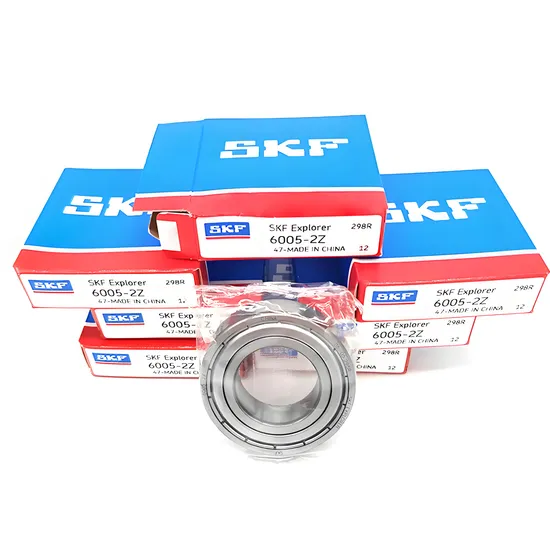
Finally, product-level traceability. SKF bearings carry batch identification markings on the rings and on the carton. These markings allow verification through SKF’s authentication systems. For wholesale orders, it is standard practice to request pre-shipment photographs of the carton markings and, where possible, to arrange independent inspection before the goods leave the warehouse [NEED_CITE: bearing inspection protocols for pre-shipment verification of authenticity and condition].
I have seen bulk shipments delayed at customs for weeks because the importer could not produce a certificate of origin matching the SKF branding on the cartons. In other cases, the cartons arrived with markings that looked correct superficially but failed verification when checked against the manufacturer’s database. The cost of these delays — demurrage, production downtime, emergency re-sourcing — runs into figures that dwarf any perceived savings from buying through informal channels.
When Should Buyers Consider Cross-Brand Alternatives?
When a specific SKF SKU carries an MOQ that cannot be met through consolidation, or when lead times for special variants extend beyond operational tolerance, cross-brand interchange to NSK, FAG, TIMKEN, NTN, or KOYO becomes a rational procurement decision — provided dimensional and specification equivalence is confirmed.
The bearing industry operates with substantial cross-brand interchangeability for standard types. A deep groove ball bearing to a given dimension standard will have functionally equivalent counterparts across all major manufacturers. Tapered roller bearings, spherical roller bearings, and cylindrical roller bearings follow the same logic, though certain internal design details — cage geometry, roller profile, grease fill — may vary between brands and should be evaluated for the specific application [NEED_CITE: dimensional interchangeability standards for rolling bearings per ISO 15].
The decision to cross-reference is not about brand loyalty. It is about keeping equipment running. I have worked with maintenance teams at steel mills in the Gulf who needed specific spherical roller bearings for continuous caster rolls. The SKF variant they preferred had a lead time that would have forced an unplanned shutdown. By cross-referencing to an equivalent NSK or FAG specification — confirming dimensional match, load rating equivalence, and clearance class compatibility — they sourced the bearings from available stock through authorized channels and avoided the shutdown.
The key discipline is this: never cross-reference based on part number similarity alone. Confirm the interchange through published dimension tables, verify the load ratings and speed limits for your application, and ensure the replacement brand is sourced through the same level of authorized documentation as the original specification would have required. A genuine NSK bearing purchased through proper channels is infinitely preferable to a counterfeit SKF bearing purchased from a zero-MOQ trader.
Our cross-brand sourcing capability covers the full interchange matrix — SKF to NSK, SKF to FAG, SKF to TIMKEN, SKF to NTN, SKF to KOYO, and all reverse directions. When MOQ or lead time makes the originally specified brand impractical, we identify the equivalent from available authorized stock, verify the dimensional and performance match, and ship with full documentation. The buyer gets a genuine bearing that fits, performs, and is fully traceable — which is the entire point.
Conclusion
SKF MOQ for wholesale is a structural feature of the authorized distribution system, not an arbitrary barrier — and understanding its logic is essential for any buyer serious about sourcing genuine bearings. MOQ thresholds vary by series, packaging, and distributor tier. Suppliers who ignore MOQ entirely are operating outside the verifiable chain. Consolidation across SKUs and across brands is the practical path for buyers with modest per-item volumes. And authenticity documentation — origin certificates, chain-of-custody records, and product traceability — is non-negotiable for any wholesale transaction. Buy through the system, and the system protects you.