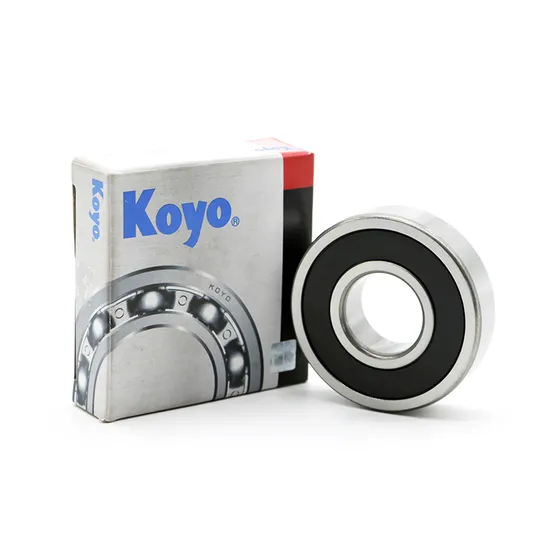
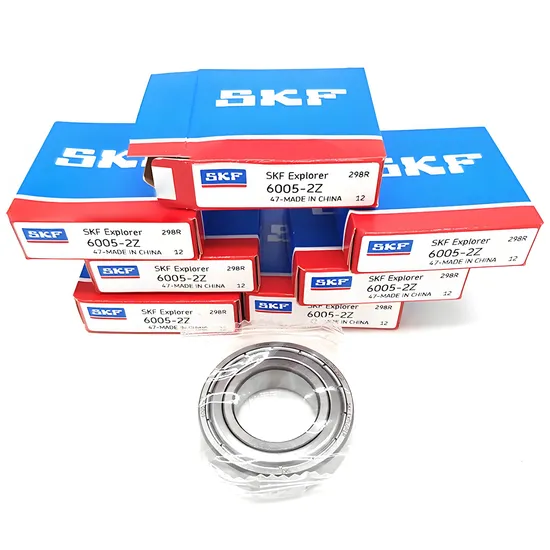
KOYO 22208 vs SKF 22208 Spherical Roller Bearing Wholesale Supplier
Most buyers assume 22208 is 22208 — same bore, same OD, same width, drop-in replacement. That assumption is where early field failures begin.
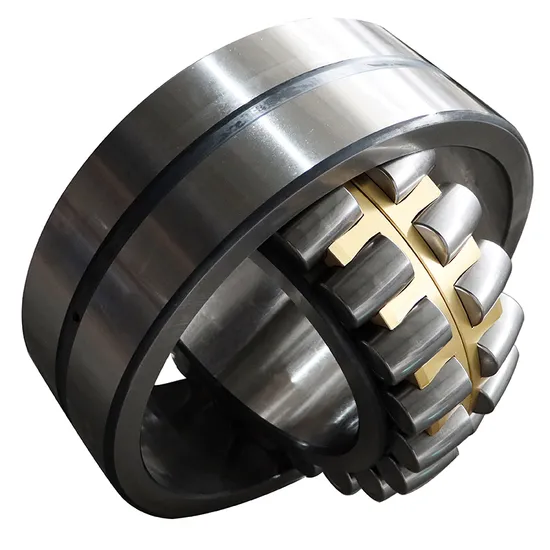
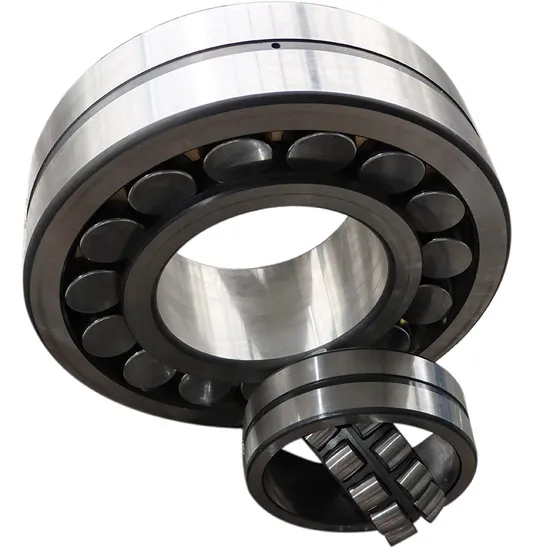
KOYO 22208 and SKF 22208 share identical boundary dimensions per ISO 15 (40 mm bore, 80 mm OD, 23 mm width), making them dimensionally interchangeable. However, their suffix systems, internal clearance grading, cage material options, and lubrication groove designs diverge significantly. A KOYO 22208RHW33 is not a direct functional match for an SKF 22208CC/W33 unless every suffix parameter is cross-verified. Procurement teams treating them as generic equivalents risk cage fracture, misaligned load distribution, and premature inner-ring spinning.
I still remember the batch that went to a cement plant outside Riyadh. The client had specified KOYO 22208, and the shipment arrived with outer-ring laser markings that looked washed out under warehouse lighting. The cage color leaned yellowish instead of the standard steel-gray. They installed the full set, and within a matter of weeks, the inner ring was spinning on the shaft. A third-party lab later confirmed the origin was not Japan — the steel composition and heat-treat signatures pointed to a small southern workshop doing private-label work. That single incident pushed me into years of obsessing over cross-reference accuracy and origin traceability across SKF, KOYO, NSK, and FAG spherical roller bearings. The lesson was simple: you are not buying a model number; you are buying the supply chain transparency behind it [NEED_CITE: ISO 15243 damage classification as framework for failure root-cause analysis].
The rest of this guide breaks down exactly where these two bearings align, where they diverge, and how sourcing teams can avoid the counterfeit and suffix-mismatch traps that quietly destroy equipment reliability.
KOYO 22208 and SKF 22208 — Are They Fully Interchangeable?
Dimensionally yes, functionally no — not unless suffix codes are mapped one-to-one.
The base envelope of any 22208 spherical roller bearing is fixed by ISO 15: 40 mm bore, 80 mm outside diameter, 23 mm width [NEED_CITE: ISO 15 rolling bearing boundary dimensions]. Both KOYO and SKF manufacture to this envelope, so physical mounting is never the issue. The divergence begins the moment you read past the basic model number into the suffix string.
SKF uses suffixes like E (optimized internal design), CC (machined brass cage or pressed steel depending on series), C3 (radial internal clearance above normal), and W33 (lubrication groove and holes on outer ring). KOYO uses R (standard design), RW33 (lubrication groove equivalent to W33), and C3 for clearance — but the cage material designation and internal geometry interpretation do not translate letter-for-letter. A KOYO 22208RHRK, for example, carries a specific cage and clearance configuration that has no single-letter SKF equivalent.
A distributor in West Africa once mixed SKF 22208 and KOYO 22208 units on a client’s conveyor line, assuming the base model was enough. The suffix mismatch meant one batch ran tighter internal clearance than the design required, and the cage fractured within months under oscillating load. The failure was not a bearing defect — it was a cross-reference oversight [NEED_CITE: spherical roller bearing suffix code comparison across major manufacturers].
When you approach a KOYO 22208 vs SKF 22208 decision as a KOYO 22208 SKF 22208 cross reference exercise, the correct workflow is to map every suffix field — cage type, clearance class, lubrication features, and internal design variant — before approving substitution.
KOYO 22208 vs SKF 22208: Dimensions, Load Ratings & Suffix Comparison
A side-by-side matrix reveals where the two brands converge on geometry and diverge on internal engineering choices.
The table below captures the key comparison dimensions that matter for 22208 spherical roller bearing interchange decisions. Load rating values follow ABMA/ISO standards, but the exact dynamic and static load numbers differ between manufacturers due to internal geometry variations — even when boundary dimensions are identical [NEED_CITE: ABMA Standard 20 for radial bearing load ratings].
| Parameter | KOYO 22208 Series | SKF 22208 Series | Interchange Note |
|---|---|---|---|
| Bore (d) | 40 mm | 40 mm | Identical per ISO 15 |
| Outside Diameter (D) | 80 mm | 80 mm | Identical per ISO 15 |
| Width (B) | 23 mm | 23 mm | Identical per ISO 15 |
| Dynamic Load Rating (C) | Manufacturer-specific | Manufacturer-specific | Varies by internal design; verify per catalog |
| Static Load Rating (C0) | Manufacturer-specific | Manufacturer-specific | Varies by internal design; verify per catalog |
| Standard Cage (pressed steel) | Available | Available | Material grade may differ |
| Machined Brass Cage Option | Available (suffix-dependent) | Available (suffix-dependent) | Confirm suffix equivalence |
| Lubrication Groove (W33/RW33) | RW33 | W33 | Functionally equivalent |
| Normal Internal Clearance | Standard | Standard | Match C3/C4 if specified |
| Optimized Internal Design | R-series variants | E-series variants | Load capacity differs; not interchangeable by default |
The critical takeaway is that dynamic and static load ratings are not universal across brands for the same 22208 footprint. SKF’s E-design variants, for instance, carry a different roller profile and contact pattern than KOYO’s standard R-series, which translates to subtly different load-carrying behavior under oscillating or misaligned conditions [NEED_CITE: manufacturer catalog load rating comparison for 22208 spherical roller bearings].
A maintenance team at a Southeast Asian mineral processing plant learned this the hard way. They sourced 22208 units based purely on OEM part numbers without checking whether the specified SKF suffix had a true KOYO equivalent. The substituted bearings ran noticeably hotter and showed early surface distress on the raceway. The load rating gap was small in percentage terms, but under continuous heavy-load operation, it shortened service life meaningfully.
For any KOYO 22208 SKF 22208 dimensions comparison, always treat the boundary dimensions as the starting point — not the finish line.
How to Verify Authenticity When Sourcing KOYO or SKF 22208
Counterfeit 22208 bearings look convincing on the outside — the damage shows up on the inside, after installation.
The counterfeit problem in spherical roller bearings is not new, but the methods used by unauthorized workshops have become increasingly sophisticated. Outer-ring markings, packaging boxes, and even holographic stickers can be replicated. Verification must go beyond visual inspection [NEED_CITE: anti-counterfeiting verification methods for imported industrial bearings].
Here is the verification workflow I apply to every KOYO 22208 and SKF 22208 shipment before it leaves the warehouse:
-
Laser Marking Inspection — Genuine SKF and KOYO bearings carry laser-etched model numbers, brand logos, and country-of-origin marks on the outer ring and side face. The font, depth, and spacing are consistent. Counterfeit marks often appear slightly blurred, uneven in depth, or use a font that does not match official brand specifications.
-
Packaging Security Features — SKF uses specific holographic labels and QR codes that link to verification databases. KOYO packaging includes batch traceability codes. Both brands update their anti-counterfeit features periodically, so cross-check against the latest official guidelines [NEED_CITE: SKF and KOYO official anti-counterfeit packaging identification guides].
-
Authorized Channel Verification — Confirm the supplier appears on the brand’s official authorized distributor list for the relevant region. This is the single most reliable filter. If a supplier cannot provide verifiable authorization documentation, walk away.
-
Third-Party Material Testing — For high-value or high-risk orders, request independent lab analysis of the bearing steel composition and heat-treat microstructure. Genuine SKF and KOYO bearings use controlled nitrogen infusion and low-inclusion steel processing that leaves identifiable metallurgical signatures [NEED_CITE: bearing steel metallurgical verification methods for authenticity confirmation].
A buyer in the Middle East once received a shipment of 22208 units at a price noticeably below market. The packaging looked correct. The laser marks passed a casual visual check. But when a sample was sent for metallurgical analysis, the inclusion density was substantially higher than what either brand’s production standard allows, and the carbide distribution pattern did not match genuine material. The entire batch was rejected.
For teams sourcing a KOYO 22208 SKF 22208 cross reference batch, building this verification protocol into the procurement process is not optional — it is the difference between reliable service life and catastrophic field failure.
What Happens When You Install a Counterfeit 22208?
The real cost of a fake bearing is never the purchase price — it is the unplanned downtime, the damaged shaft, and the lost production.
Counterfeit spherical roller bearings fail in predictable but destructive patterns. Because the steel quality, heat treatment, and grinding precision are uncontrolled, the failure modes tend to appear early and cascade quickly.
The most common failure patterns observed in field returns of counterfeit 22208 units include:
-
Inner-Ring Spinning — The bore surface wears prematurely due to inadequate hardness or improper grinding geometry. The bearing inner ring loses its interference fit and begins to rotate on the shaft, destroying both the shaft journal and the inner ring bore. This was exactly what happened at the Riyadh cement plant mentioned earlier.
-
Cage Fracture — Counterfeit cages are often made from inferior brass or poorly formed pressed steel. Under oscillating load or high-speed operation, the cage pockets crack, rollers lose guidance, and the bearing seizes. A European aggregate processor reported cage failure on substituted 22208 units that had been sourced without origin verification — the cage material was visibly softer than genuine specification [NEED_CITE: common failure modes of counterfeit spherical roller bearings per field return data].
-
Premature Raceway Spalling — Inadequate heat treatment leads to surface and subsurface fatigue cracks that propagate rapidly. Spalling appears well before the expected service life, often within the first few months of operation.
-
Abnormal Noise and Vibration — Poor roller roundness and raceway finish generate elevated vibration signatures from day one. In precision-dependent applications, this is immediately detectable; in heavy machinery, it is often ignored until secondary damage occurs.
The financial impact of these failures extends far beyond the bearing cost. Shaft repair or replacement, unplanned line stoppage, and expedited replacement bearing sourcing multiply the original savings into a mid-six-figure loss. For any operation evaluating a KOYO 22208 SKF 22208 wholesale supplier, the authenticity question is ultimately a total-cost-of-ownership question.
How to Source Genuine KOYO 22208 and SKF 22208 from China
China remains one of the world’s largest bearing sourcing hubs — and one of the highest-risk environments for counterfeit mixing.
The challenge for global buyers is that legitimate authorized distributors and unauthorized resellers operate side by side, often on the same trading platforms. Price alone is a poor indicator. Some unauthorized sellers offer genuine-origin product mixed with counterfeit; others sell entirely fake stock with convincing documentation.
A reliable sourcing path for KOYO 22208 and SKF 22208 from China requires three layers of protection:
-
Authorized Distributor Confirmation — Work only with suppliers who can demonstrate current authorization from the brand principal or from a verified tier-one master distributor. Authorization should be verifiable through the brand’s official channel, not just a self-issued certificate.
-
Origin Traceability Documentation — Genuine KOYO and SKF bearings carry production origin information that can be traced back to the manufacturing facility. KOYO’s primary spherical roller bearing production for the global aftermarket is based in Japan, while SKF operates multiple plants across Europe and Asia. The origin declaration on the packing list should match the known production footprint for that specific model [NEED_CITE: KOYO and SKF global manufacturing facility location references for spherical roller bearings].
-
Cross-Reference Support at Point of Order — A competent KOYO 22208 SKF 22208 wholesale supplier should be able to provide a complete suffix-to-suffix mapping at the quotation stage, confirming that the offered KOYO variant truly matches the SKF specification required — or flagging where it does not. This service separates professional bearing sourcing partners from generic trading desks.
A mining operator in Central Asia had been sourcing 22208 units through a general trading company for an extended period. When they switched to a specialized bearing sourcing partner with authorized-channel access and cross-reference capability, the field failure rate dropped noticeably. The previous supplier had not been selling outright fakes — but had been mixing origin batches and ignoring suffix mismatches, creating inconsistent performance across the fleet.
The right sourcing partner does not just ship boxes. They provide the technical verification, the origin transparency, and the cross-reference accuracy that turn a model number into a reliable installed component.
Conclusion
KOYO 22208 and SKF 22208 are dimensionally identical but functionally distinct — suffix alignment, load rating verification, and origin authentication are non-negotiable for reliable operation.
Treating these two bearings as generic equivalents invites cage failure, raceway distress, and inner-ring damage. The procurement teams that perform disciplined cross-reference checks, enforce authenticity verification, and source through authorized channels consistently avoid the field failures that plague less rigorous operations. A KOYO 22208 SKF 22208 wholesale supplier relationship should be built on technical transparency, not just price competitiveness.