
FAG Bearing Part Number Guide: Cross-Reference & Wholesale Supplier
A base number match does not mean interchangeability.
Decoding an FAG bearing part number requires reading both the basic designation and the suffix codes, which define internal clearance, cage material, and sealing type. Cross-referencing FAG with SKF, NSK, or TIMKEN is possible only when suffix layers are compared step by step, not by base number alone.
Back when I was doing field service at a machine tool plant in Suzhou Industrial Park, a customer called me in for an emergency spindle shutdown. They had pulled a replacement bearing from local stock, handed me a box marked "FAG 22320," and expected a quick swap. The laser etching on the outer ring looked off—too shallow in places, uneven in depth—and the inner ring chamfer was rough to the touch. I refused to install it. When we cut the cage open for comparison, the material was visibly inferior. That bearing would not have survived a full production shift, let alone a reasonable service cycle [NEED_CITE: failure root cause distribution per ISO 15243]. After that incident, I became obsessive about part number decoding and origin traceability. Now, every time a buyer sends an inquiry, my first move is to verify the original code and run a full cross-reference check. Even a half-step mismatch in clearance group between SKF and FAG can lead to a catastrophic field failure.
Let me walk you through how to read these codes correctly, how to cross-reference safely, and how to avoid the substitution traps that cause premature equipment failure.
What Does Each Part of an FAG Bearing Part Number Mean?
The basic designation defines size and type; the suffix codes define everything that determines whether the bearing actually fits your application.
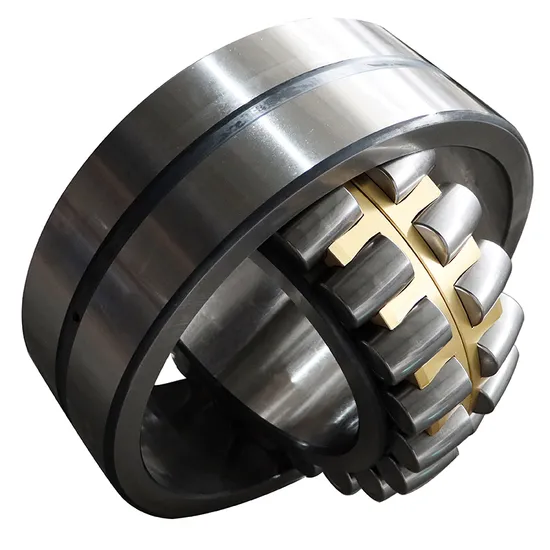
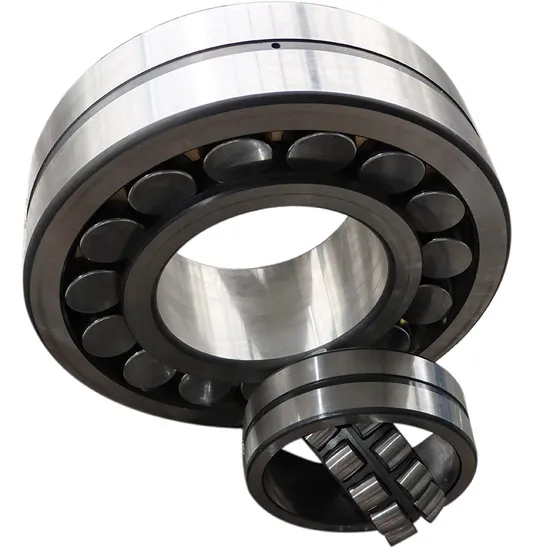
An FAG bearing part number follows a structured logic governed by DIN 625 and ISO 15 standards [NEED_CITE: ISO 15 rolling bearing boundary dimensions]. The basic designation—the numbers you see first—tells you the bearing series, bore diameter, and outer dimension range. For example, in "6205," the "6" indicates a deep groove ball bearing, and "05" indicates a 25 mm bore. In "22320," the "22" signals a spherical roller bearing, "3" indicates the width and diameter series, and "20" points to a 100 mm bore.
But the basic designation alone is only the starting point. The suffix codes that follow carry the critical application-specific data:
| Suffix | Meaning | Application Impact |
|---|---|---|
| C3 | Radial internal clearance above normal | High-speed or high-temperature operation |
| C4 | Radial internal clearance further above C3 | Heavy thermal expansion environments |
| J20B | Steel cage, specific design variant | Load capacity and speed limit differences |
| M | Brass cage | Higher temperature resistance, heavier duty |
| 2RS | Contact seals on both sides | Contaminated or wet environments |
| E1 | Internal design modification, improved roller profile | Higher load capacity, reduced edge stress |
A buyer once sent me a request for "FAG 22320" with no suffix specified. When I asked what the original equipment used, it turned out the OEM spec called for 22320 E1 C3. The customer had been ordering plain 22320 for months—no E1 design modification, no C3 clearance—and their crushers were seeing roller spalling well before expected maintenance intervals [NEED_CITE: spherical roller bearing failure modes per SKF bearing handbook]. The base number matched, but the bearing was fundamentally wrong for the application.
The takeaway is straightforward: never treat the numeric portion as the full identity of the bearing. The suffix layer is where application fit is decided.
How Do FAG Bearing Suffixes Affect Performance?
Suffixes are not optional annotations—they directly govern clearance behavior, cage durability, and contamination resistance under real operating conditions.
Consider radial internal clearance. A standard clearance bearing (no suffix) is designed for normal operating temperatures and moderate speeds. When you move to C3 or C4, the bearing accommodates thermal expansion of the inner ring relative to the outer ring—critical in applications like paper machine dryers or continuous casting rollers where shaft temperatures rise substantially during operation [NEED_CITE: bearing clearance selection guidelines per ABMA standards]. Install a standard clearance bearing in a high-temperature position, and the inner ring expansion will preload the rolling elements, causing rapid overheating and cage failure.
Cage material suffixes carry similar weight. A J20B stamped steel cage is lighter and allows higher speed capability, but it has lower thermal resistance than an M-design brass cage. In a heavy-duty vibrating screen application, I have seen steel-caged bearings fail from cage pocket wear while brass-caged equivalents in the same position continued running through multiple maintenance cycles. The suffix difference was the only variable.
Sealing suffixes matter just as much. A 2RS designation means double contact seals, suitable for environments with dust, moisture, or washdown conditions. An open bearing (no seal suffix) in the same environment will ingest contaminants and fail from abrasive wear—not from any defect in the bearing itself, but from a specification mismatch at the ordering stage.
A maintenance team at a Middle East cement plant learned this the hard way. They replaced failed fan bearings with units carrying the correct base number but without the original 2RS seal suffix. Within a few months, dust ingress caused grease degradation and progressive roller damage across the entire fan bank. The cost of the replacement bearings was minor compared to the downtime and relubrication labor they incurred [NEED_CITE: contamination-related bearing failure percentage per industry reliability studies].
When you specify or cross-reference an FAG bearing part number, every suffix letter and number must be accounted for. Skipping even one is a specification gamble.
Can I Cross-Reference FAG with SKF, NSK, or TIMKEN?
Cross-brand interchange is feasible, but only if you compare layer by layer—basic size, internal design, clearance group, cage type, and sealing format.
Many buyers assume that if the base numbers match across brands, the bearings are directly swappable. This is one of the most persistent and costly misconceptions in industrial procurement. The basic designation system is largely standardized across manufacturers under ISO conventions, meaning a "6206" from FAG, SKF, NSK, or TIMKEN will share the same boundary dimensions. But internal design details—roller profile, cage architecture, clearance grading, and seal construction—vary by manufacturer and are encoded in each brand’s own suffix system.
Here is how a structured cross-reference process works:
- Confirm basic dimensions match. Verify bore, outer diameter, and width against ISO 15 boundary dimension tables. This step eliminates gross size mismatches [NEED_CITE: ISO 15 boundary dimension tables for rolling bearings].
- Map the suffix codes across brands. Use a cross-reference chart to translate FAG suffixes into their SKF, NSK, or TIMKEN equivalents. For instance, FAG’s C3 clearance corresponds directly to SKF’s C3, but FAG’s E1 internal design modification does not have a one-to-one letter match in every brand—some brands use different designators for their enhanced roller profile variants.
- Validate application compatibility. Confirm that the mapped equivalent meets the specific operating requirements: speed, temperature, load direction, and contamination exposure.
A buyer in the Central Asian mining sector needed to replace TIMKEN tapered roller bearings on a conveyor drive. The original spec called for a specific TIMKEN 32218 variant with a particular clearance and cage configuration. By running a full cross-reference against our interchange database, we identified the matching FAG equivalent with verified clearance group and cage type alignment. The replacement units were installed and ran through a full maintenance cycle without issue.
We maintain complete cross-reference interchange coverage across SKF, NSK, FAG, TIMKEN, NTN, and KOYO, and we support buyers with technical selection guidance matched to their specific application conditions. When a buyer sends us an OEM part number—regardless of original brand—we trace the full suffix chain and confirm the correct equivalent before quoting.
The risk of skipping this process is real. A European food processing operator substituted an FAG spherical roller bearing for an NSK unit based on base number alone, without verifying the cage material suffix. The replacement bearing’s cage was not rated for the washdown chemical environment. Cage corrosion followed, leading to a production line stoppage that cost far more than the price difference between correctly specified units.
How to Verify Your FAG Bearing Is Genuine?
Authenticity verification requires multiple independent checks—no single indicator is sufficient on its own.
Counterfeit bearings remain a serious problem in global industrial supply chains. Sophisticated counterfeiters can replicate laser etching, packaging colors, and even basic documentation. Relying on any single visual check is a false sense of security. A robust verification approach combines several independent signals.
Anti-counterfeit code verification. Schaeffler Group provides an online verification system for FAG products. Each genuine package carries a unique code that can be checked against the manufacturer’s database. If the code is missing, duplicated, or fails validation, the unit should be rejected immediately [NEED_CITE: Schaeffler Group anti-counterfeit verification system documentation].
Authorized channel confirmation. Purchase only from dealers listed on the manufacturer’s authorized distributor network. We operate as an authorized sourcing channel and can provide origin documentation and verification guidance for every unit we supply. When a buyer asks about origin, we trace the supply chain back to the manufacturer’s production facilities and provide supporting paperwork.
Physical inspection markers. Genuine FAG bearings exhibit consistent laser etching depth and clarity, precise inner ring chamfer finishing, and cage material that matches the suffix specification. Counterfeit units often show irregular etching depth, rough chamfers, and cage material that does not correspond to the marked suffix. In the Suzhou incident I described earlier, the counterfeit unit’s cage material was visibly inconsistent with what the suffix code should have indicated—a clear physical red flag.
Packaging and documentation quality. Original FAG packaging uses specific cardboard grades, printing quality, and labeling formats that are difficult for counterfeiters to replicate precisely. Compare received packaging against known genuine samples from the same product line.
As a wholesale supplier specializing in genuine-brand bearings, we provide authenticity verification and anti-counterfeit guidance as a standard part of our sourcing process. Every shipment we handle is traceable to authorized distribution channels, and we support buyers with country-of-origin identification documentation.
What Happens When You Use the Wrong Substitution?
Incorrect substitution does not always cause immediate failure—often, it causes accelerated degradation that mimics normal wear, making the root cause difficult to diagnose.
The most dangerous outcome of a wrong bearing substitution is not a catastrophic breakdown on day one. It is a bearing that runs "well enough" to pass initial inspection but degrades at an accelerated rate, failing well before its designed service life. This pattern is common because the mismatch is often subtle—a clearance group one step too tight, a cage material unsuited to the thermal environment, or a seal type that allows gradual contaminant ingress.
Consider a case involving a steel mill in South Asia. The maintenance team replaced a set of spherical roller bearings on a continuous caster roll. The original specification called for FAG 22320 E1 C4. The replacement units were base-matched 22320 bearings from another source, but without the E1 internal design and with C3 instead of C4 clearance. The bearings ran initially without obvious issues. However, under the high thermal load of the casting line, the insufficient clearance caused progressive internal preload buildup. Roller surface spalling appeared within a fraction of the expected service cycle. The mill faced not only the bearing replacement cost but also the production loss from an unplanned roll change [NEED_CITE: bearing premature failure cost analysis per maintenance engineering studies].
Another pattern I have seen repeatedly: buyers source bearings based on the lowest unit price, without verifying suffix compliance. The per-unit savings are real but trivial compared to the cost of a single unplanned downtime event. A mid-six-figure loss in production downtime can trace back to a substitution decision that saved a small amount on the bearing invoice.
The lesson from the field is consistent: the bearing part number is a complete specification, not a partial one. Every digit and letter matters. Treating the base number as the full identity of the bearing is a procurement shortcut that equipment reliability will not forgive.
Conclusion
Reading an FAG bearing part number correctly is the foundation of reliable bearing selection and safe cross-brand interchange. The basic designation tells you the size; the suffix codes tell you whether the bearing will actually survive your operating conditions. Cross-referencing across brands requires layer-by-layer comparison, not base-number matching. Authenticity verification demands multiple independent checks, not a single visual glance. And wrong substitutions rarely announce themselves immediately—they degrade silently until the cost of failure far exceeds the savings of a careless procurement decision. Treat every suffix as a functional requirement, and treat every cross-reference as a technical verification, not an administrative formality.


