Dual-Brand KOYO SKF Sourcing for Construction Equipment
SKF and KOYO bearings are not universally interchangeable across construction equipment, despite shared ISO dimensions — cross-brand sourcing requires matching internal clearance, cage design, and heat treatment protocols to the OEM specification.
When sourcing KOYO SKF bearings for construction machinery, buyers must verify cross-reference compatibility at the internal geometry level, not just the outer dimension chart. A bearing that fits the shaft may still fail prematurely if clearance class, cage material, or seal type mismatches the original equipment manufacturer’s operating conditions. Genuine cross-brand interchange demands technical validation beyond the part number.
I still remember standing in a dusty maintenance bay in Riyadh, watching a technician pull apart a tapered roller bearing that had seized inside a concrete mixer drum. The outer ring was scored, the rollers were blued from overheating, and the cage was shattered into fragments. The equipment manager handed me the box — it said KOYO 32218 on the label. But something felt off. The marking font was slightly wrong, the suffix was missing, and when I checked the batch traceability, the origin country didn’t match what the manufacturer produces for that series. That unit had run for less than a quarter of its expected service life. [NEED_CITE: typical service life range for tapered roller bearings in heavy-duty mixing applications per ISO 281]
This is not an isolated case. Across construction sites from Dubai to Lagos, I see the same pattern: buyers assume that if two brands share the same basic model number, the bearings are functionally identical. They are not. SKF and KOYO both manufacture to ISO standards for boundary dimensions, but internal design choices — cage type, internal clearance, surface finish, and heat treatment — vary meaningfully between brands and even between product lines within the same brand.
The reality of dual-brand sourcing is that it works — but only when done with technical discipline. Let me walk you through what actually matters when you need to source KOYO SKF bearings for construction equipment, and where most buyers get it wrong.
Can KOYO and SKF Bearings Be Used Interchangeably in Construction Equipment?
Yes, but only when the cross-reference is validated beyond boundary dimensions — internal clearance, cage design, and lubrication compatibility must match the OEM application requirements.
The short answer that most trading companies will give you is "yes, they are the same size, so they fit." That answer has caused more equipment downtime than any single manufacturing defect I have encountered. Here is why.
Both SKF and KOYO produce bearings that conform to ISO 15 for boundary dimensions — meaning the outer diameter, bore diameter, and width are standardized. A KOYO 6206 and an SKF 6206 will physically mount into the same housing. But construction equipment does not operate in a dimensional vacuum. It operates under shock loads, contamination exposure, thermal cycling, and misalignment conditions that demand specific internal design features. [NEED_CITE: ISO 15 boundary dimension standardization scope and limitations]
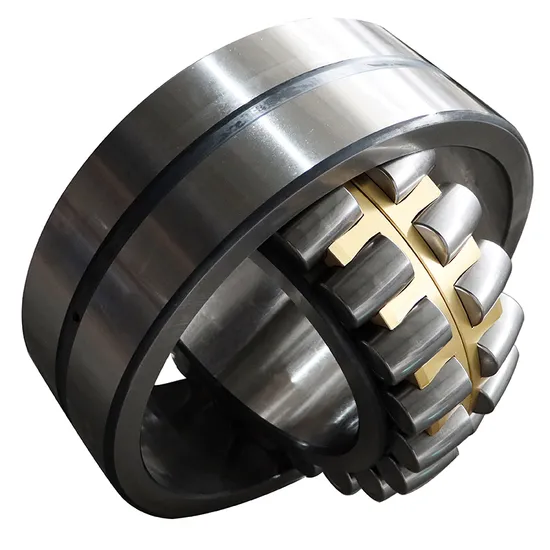
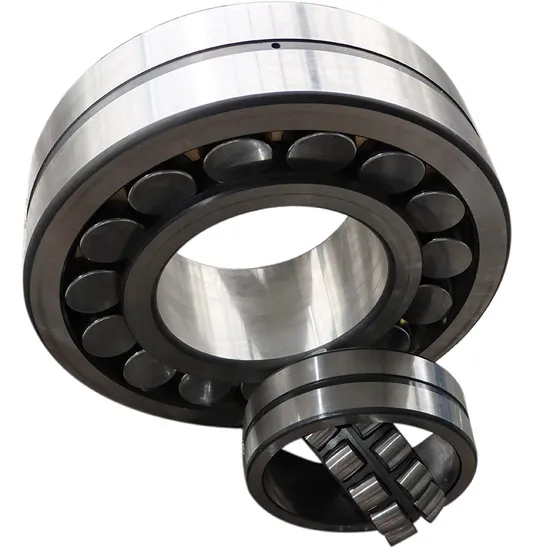
Consider a vibrating screen on a quarry site. The original equipment was fitted with SKF 22320 spherical roller bearings, specified with C4 internal clearance and a pressed steel cage. A maintenance buyer, unable to source the SKF unit locally, purchased KOYO 22320 bearings from a regional supplier. The KOYO bearings arrived with C3 clearance and a machined brass cage. Physically, they fit. But the tighter clearance caused internal preload under thermal expansion, the brass cage responded differently to the vibration frequency, and the bearings overheated within weeks.
The interchangeability matrix below shows what actually needs to be matched — not just the model number.
| Parameter | SKF Specification | KOYO Equivalent | Interchange Risk If Mismatched |
|---|---|---|---|
| Boundary Dimensions | ISO 15 compliant | ISO 15 compliant | Low — physical fit confirmed |
| Internal Clearance | C3 / C4 / C4U available | C3 / C4 available | High — thermal expansion mismatch |
| Cage Material | Pressed steel / machined brass | Pressed steel / machined brass | Medium — vibration response differs |
| Seal Type | 2RSH / RS1 / open | 2RS / RU / open | High — contamination ingress risk |
| Heat Treatment | Standard through-hardened | Standard through-hardened | Low if both genuine |
| Precision Class | P0 / P6 / P5 | P0 / P6 / P5 | Medium — affects high-speed applications |
[NEED_CITE: internal clearance class impact on bearing operational life under thermal loading]
A distributor in West Africa once received a return claim from a road construction client. The client had ordered KOYO 30206 taper bearings to replace worn SKF units in wheel hubs. The KOYO bearings were genuine, properly sourced, and correctly dimensioned. But they were supplied with standard C0 clearance instead of the C3 clearance that the hub design required for the operating temperature range. The bearings failed from internal preload within a few hundred hours of operation. The cost of the replacement — including equipment downtime, labor, and logistics — was many times the original bearing cost.
The lesson is straightforward: KOYO SKF bearing interchange works when you match the full specification, not just the model number.
How to Verify Authenticity When Sourcing KOYO SKF Bearings Across Brands?
Authenticity verification for KOYO SKF bearings requires checking multiple markers — packaging quality, marking consistency, batch traceability, and surface finish — because counterfeits have become sophisticated enough to replicate single markers.
I have seen counterfeit bearings that pass the packaging test, the marking test, and even the weight test — all at once. The counterfeiting industry is not what it was a decade ago. Today’s fake bearings can look convincing to an untrained eye, and they are increasingly being sold through channels that appear legitimate. [NEED_CITE: common counterfeit indicators for industrial bearings per industry anti-counterfeiting guidelines]
When I source KOYO SKF bearings for a client, I follow a layered verification process. No single check is sufficient. Here is what I look at.
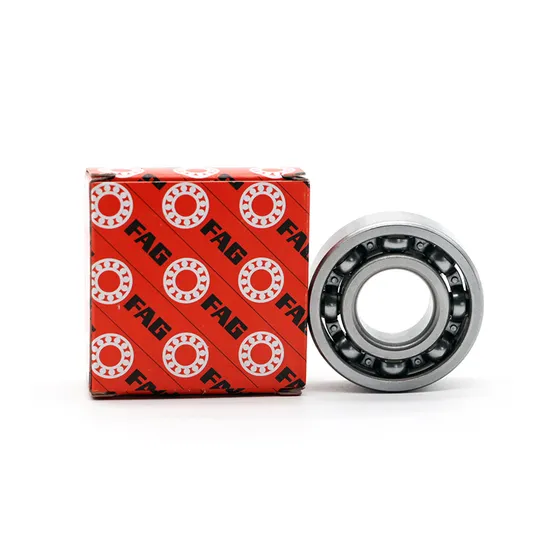
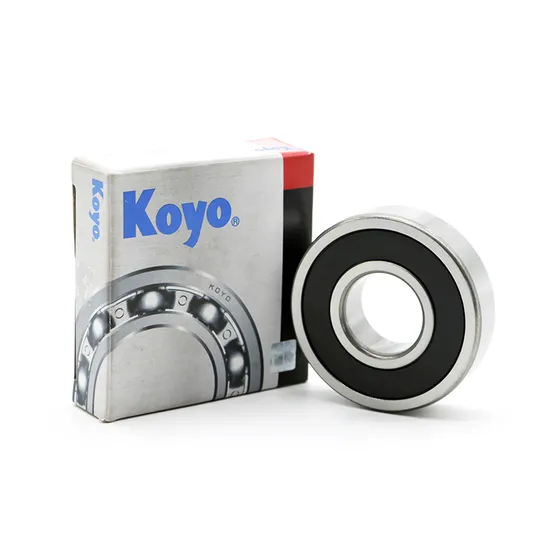
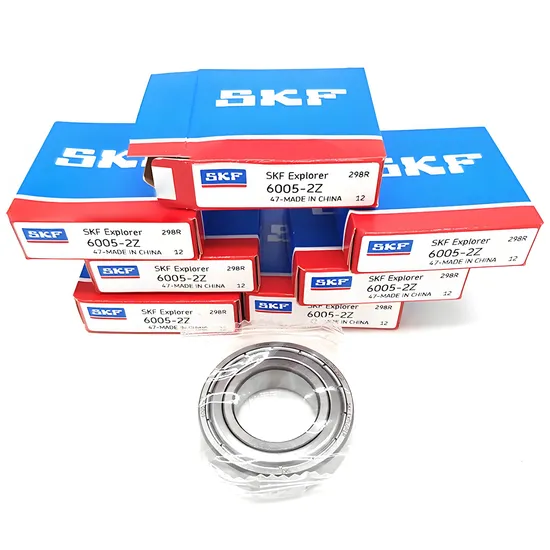
First layer: Packaging and marking consistency. Both SKF and KOYO have specific font styles, logo proportions, and color codes on their packaging. Counterfeiters often get these slightly wrong — a logo that is too sharp, a font that is slightly too thin, a color that is slightly off. On the bearing itself, the model number marking should be clean, evenly spaced, and laser-etched or stamped with consistent depth. Blurry or uneven markings are an immediate red flag.
Second layer: Surface finish and material appearance. A genuine bearing raceway has a specific surface finish that is difficult to replicate without precision grinding equipment. When I inspect a suspect bearing, I look at the raceway under magnification. Counterfeit raceways often show chatter marks, inconsistent polish, or a surface texture that is visibly different from a known genuine unit. The rollers or balls should also have a uniform appearance — any discoloration, pitting, or surface irregularity suggests inferior material or heat treatment.
Third layer: Batch traceability. Both SKF and KOYO maintain batch coding systems that allow traceability back to the production facility. When I source bearings for a client, I verify that the batch code on the bearing matches the batch code on the packaging, and that the indicated production facility is one that the manufacturer actually operates for that product line. [NEED_CITE: SKF and KOYO batch traceability systems and verification methods]
A buyer in Central Asia contacted me after purchasing a batch of KOYO 6305 bearings from an online marketplace. The price was significantly below market rate. When the shipment arrived, the packaging looked correct at first glance. But under closer inspection, the inner box material was slightly different, the batch codes on individual bearings did not match the outer box code, and the raceway finish under magnification showed irregularities consistent with inferior grinding. The bearings were counterfeit. Had they been installed in the client’s conveyor system, they would likely have failed rapidly, causing downstream damage.
Verification is not optional when sourcing KOYO SKF bearings. It is the difference between a bearing that performs as designed and one that becomes a liability.
What Are the Critical Selection Criteria for KOYO SKF Bearings in Construction Applications?
Selection of KOYO SKF bearings for construction equipment must prioritize load type, contamination exposure, operating temperature, and maintenance access — not just the model number from the OEM parts list.
Construction equipment operates in some of the harshest environments any mechanical component can face. Dust, mud, water, shock loads, misalignment, and extended periods of operation under heavy load are standard conditions. Selecting the right bearing for these conditions requires understanding the application, not just reading a catalog.
Here is a systematic approach I use when helping clients select KOYO SKF bearings for construction machinery.
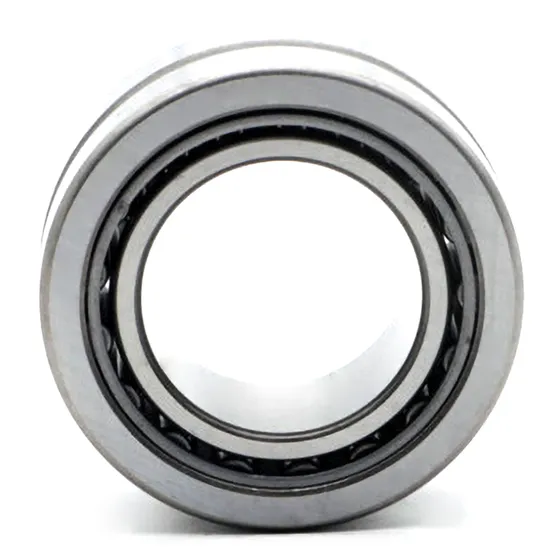
Step 1: Identify the load profile. Is the bearing primarily under radial load, axial load, or combined load? Tapered roller bearings like the KOYO 32218 or SKF 32218 are designed for combined loads and are common in wheel hubs, gearboxes, and final drives. Spherical roller bearings like the 22320 series handle heavy radial loads with moderate axial capacity and are common in vibrating screens and oscillating mechanisms. Deep groove ball bearings like the 6205 or 6305 series are used for lighter loads and higher speeds. [NEED_CITE: bearing type selection guidelines based on load profile per ISO standards]
Step 2: Assess contamination exposure. If the bearing operates in a high-contamination environment — such as a concrete mixer, crusher, or screen — sealed or shielded bearings are essential. The seal type must be compatible with the contamination level. A rubber contact seal provides better protection than a non-contact shield, but it also generates more friction and heat. The selection must balance protection and thermal performance.
Step 3: Determine operating temperature range. Internal clearance must be selected based on the expected operating temperature. Standard C0 clearance may be appropriate for normal temperatures, but high-temperature applications require C3 or C4 clearance to compensate for thermal expansion of the inner ring and shaft. Selecting the wrong clearance class is a common cause of premature failure.
Step 4: Evaluate maintenance access. If the bearing location is difficult to access for relubrication, selecting a bearing with extended relubrication intervals or a sealed-for-life design is critical. Construction equipment often operates in remote locations where maintenance access is limited.
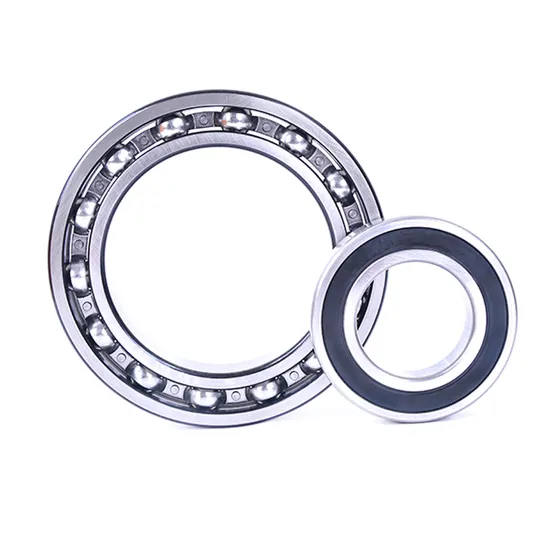
I worked with a mining operator in East Africa that was experiencing repeated failures of deep groove ball bearings in their conveyor idlers. The original specification called for open bearings with external sealing. After inspecting the application, it was clear that contamination ingress was the primary failure mode. By switching to sealed KOYO 6206 bearings with integrated contact seals, the bearing service life extended substantially. The sealed design prevented contamination from entering the bearing cavity, and the maintenance interval increased significantly. [NEED_CITE: impact of sealing design on bearing service life in contaminated environments]
Selection is not about finding the cheapest bearing that fits. It is about matching the bearing design to the application conditions. When done correctly, KOYO SKF bearing selection delivers reliable performance and reduced total cost of ownership.
How to Source KOYO SKF Bearings from Authorized Channels Without Overpaying?
Sourcing KOYO SKF bearings from authorized channels requires verifying distributor status, comparing wholesale pricing structures, and understanding the supply chain — but authorization does not always mean the highest price.
The bearing market is flooded with suppliers claiming to offer genuine products. Some do. Many do not. And among those who do, pricing varies significantly based on sourcing strategy, volume, and market positioning. As a buyer, you need to navigate this landscape without overpaying and without compromising on authenticity.
Here is what I have learned from years of sourcing KOYO SKF bearings across multiple markets.
Verify authorized distributor status. Both SKF and KOYO maintain networks of authorized distributors. These distributors have direct relationships with the manufacturers and receive products through verified supply chains. Purchasing from an authorized distributor significantly reduces the risk of counterfeit products. However, authorization alone does not guarantee the best price. [NEED_CITE: SKF and KOYO authorized distributor verification programs]
Understand wholesale pricing structures. Bearing pricing is influenced by volume, product mix, and market conditions. Large distributors often offer tiered pricing based on order volume. If you are a regular buyer, establishing a relationship with a distributor who understands your volume patterns can result in meaningful cost savings. However, be cautious of prices that are significantly below market — this is often a red flag for counterfeit or parallel-import products.
Evaluate the supply chain. Where do the bearings come from? Both SKF and KOYO operate manufacturing facilities in multiple countries. The country of origin can affect pricing, lead time, and product availability. Understanding the supply chain helps you make informed decisions about sourcing strategy. For example, certain product lines may be more cost-effectively sourced from specific manufacturing locations.
Balance price and service. The lowest price is not always the best value. A distributor who provides technical support, authenticity verification, and reliable delivery may offer better overall value than a supplier who offers the lowest price but provides no support. When sourcing KOYO SKF bearings, consider the total cost of the transaction — including the cost of verification, the risk of counterfeit, and the cost of downtime if a bearing fails prematurely.
A construction equipment dealer in South America was purchasing bearings from multiple suppliers, always choosing the lowest price. After experiencing several counterfeit-related failures, they switched to a single authorized distributor who provided authenticity verification and technical support. The per-unit price was slightly higher, but the total cost of ownership decreased significantly due to the elimination of counterfeit-related failures and the reduction in equipment downtime.
Sourcing KOYO SKF bearings is not just about finding a supplier. It is about building a sourcing strategy that balances authenticity, price, and service.
Conclusion
Dual-brand KOYO SKF sourcing for construction equipment succeeds only when buyers validate interchange at the internal specification level, verify authenticity through layered inspection, select bearings based on application conditions, and source through verified channels.
The construction equipment market does not tolerate bearing failure. Downtime is expensive, conditions are harsh, and the cost of a counterfeit or mismatched bearing extends far beyond the unit price. By approaching KOYO SKF bearing sourcing with technical discipline — matching clearance, cage, and seal specifications to the application, verifying authenticity through multiple markers, selecting based on load and contamination profiles, and sourcing from authorized channels — buyers can achieve reliable performance and predictable total cost of ownership. The bearing is a small component, but its impact on equipment uptime is disproportionately large.